
Sound available — use the speaker control to listen.
From nature to sculptural form.
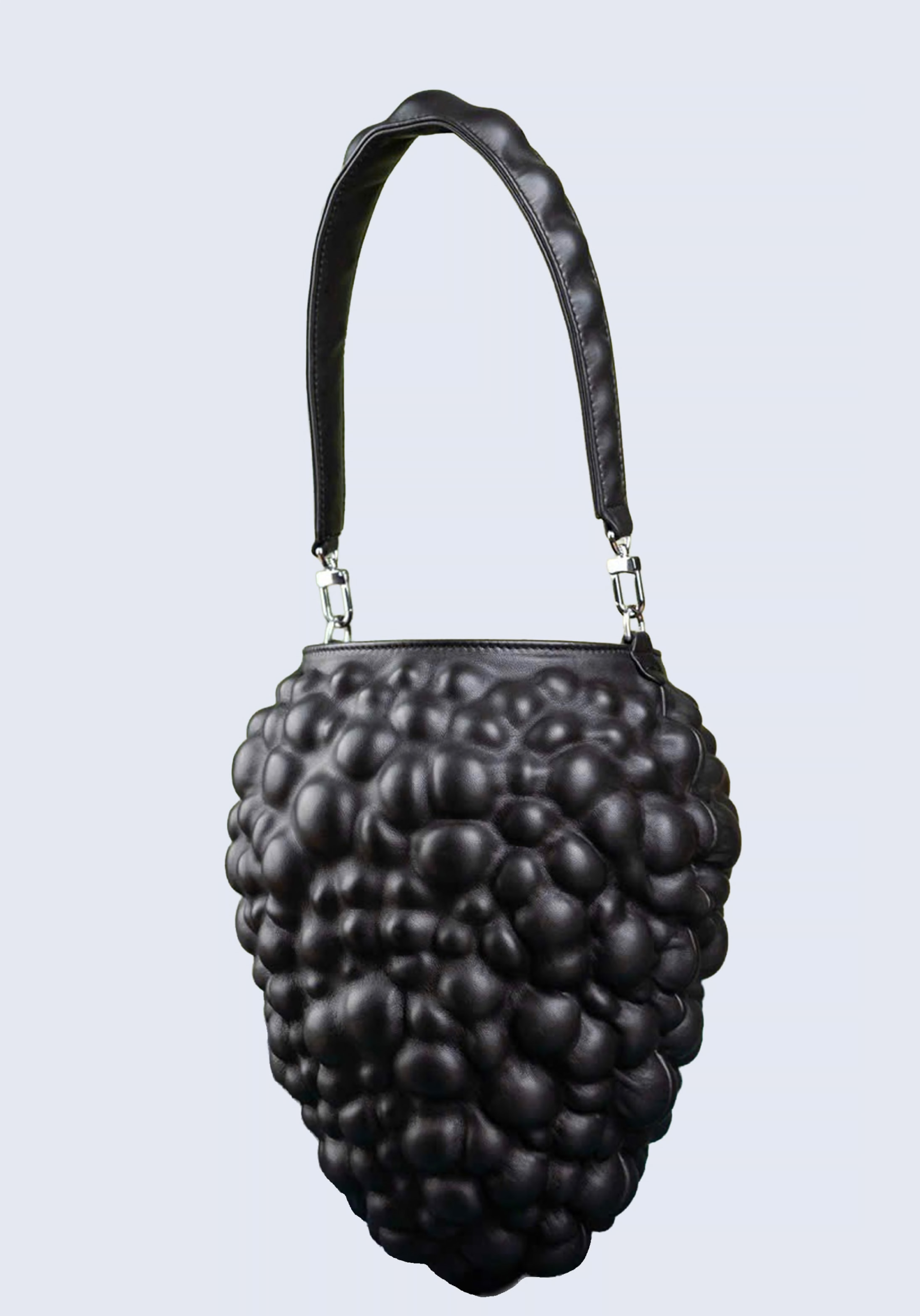
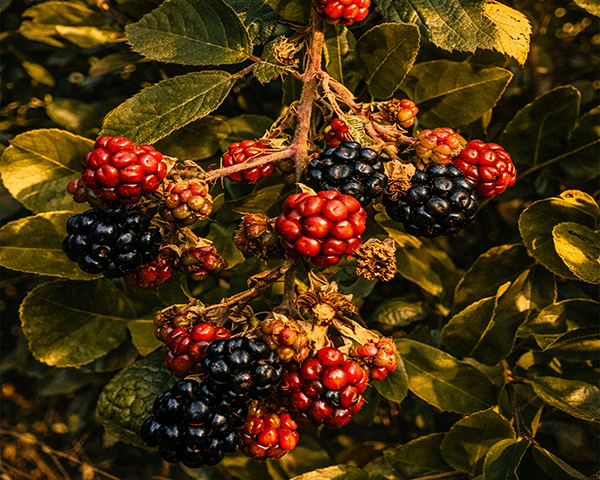
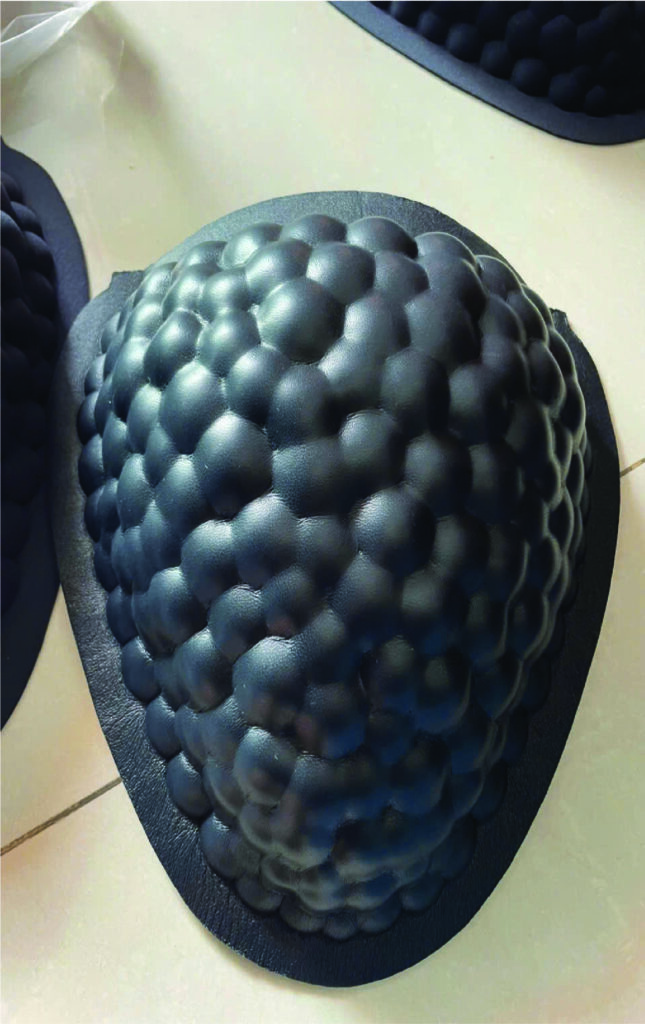
Inspired by nature around Melbourne, the Berry Bag began with the clustered forms of blackberries. Designed by Kim Clark for KIMC STUDIO, it developed through sketches, physical models and digital studies into a sculptural bag in reclaimed lamb leather.
The design explores how organic forms can become functional fashion: a berry-shaped handbag that balances a clustered surface with space for everyday essentials.
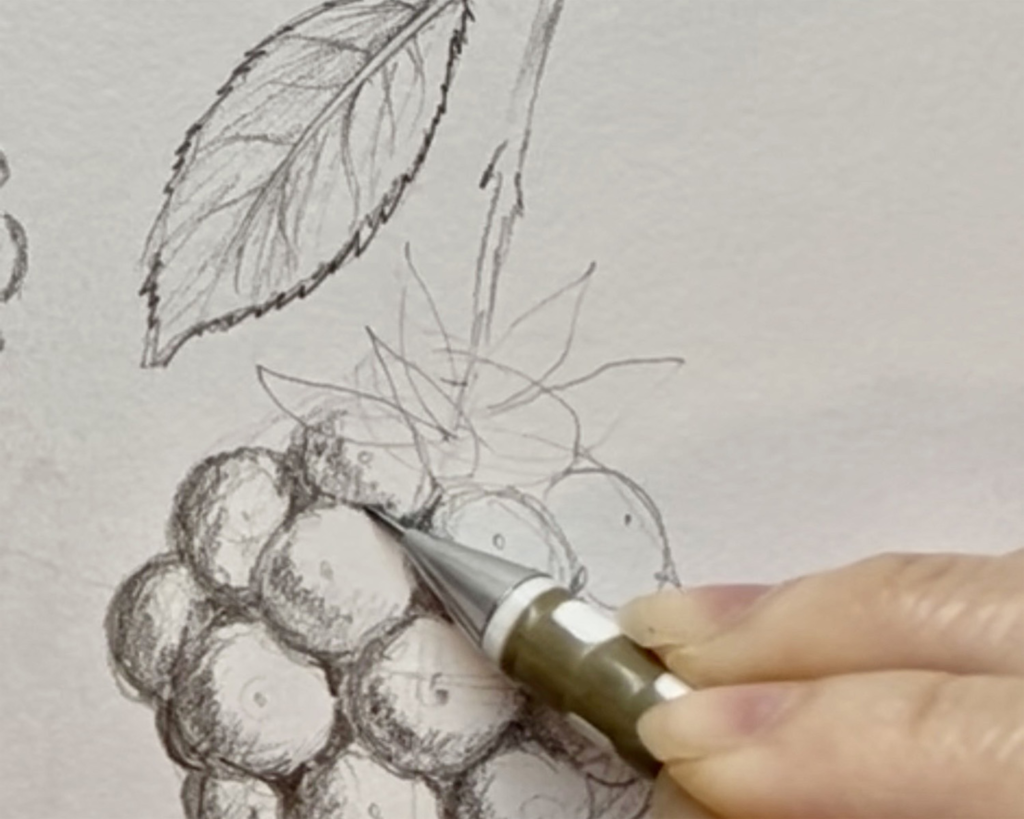
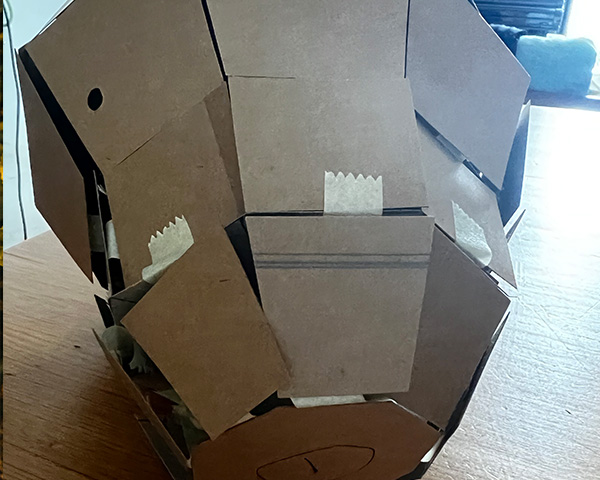
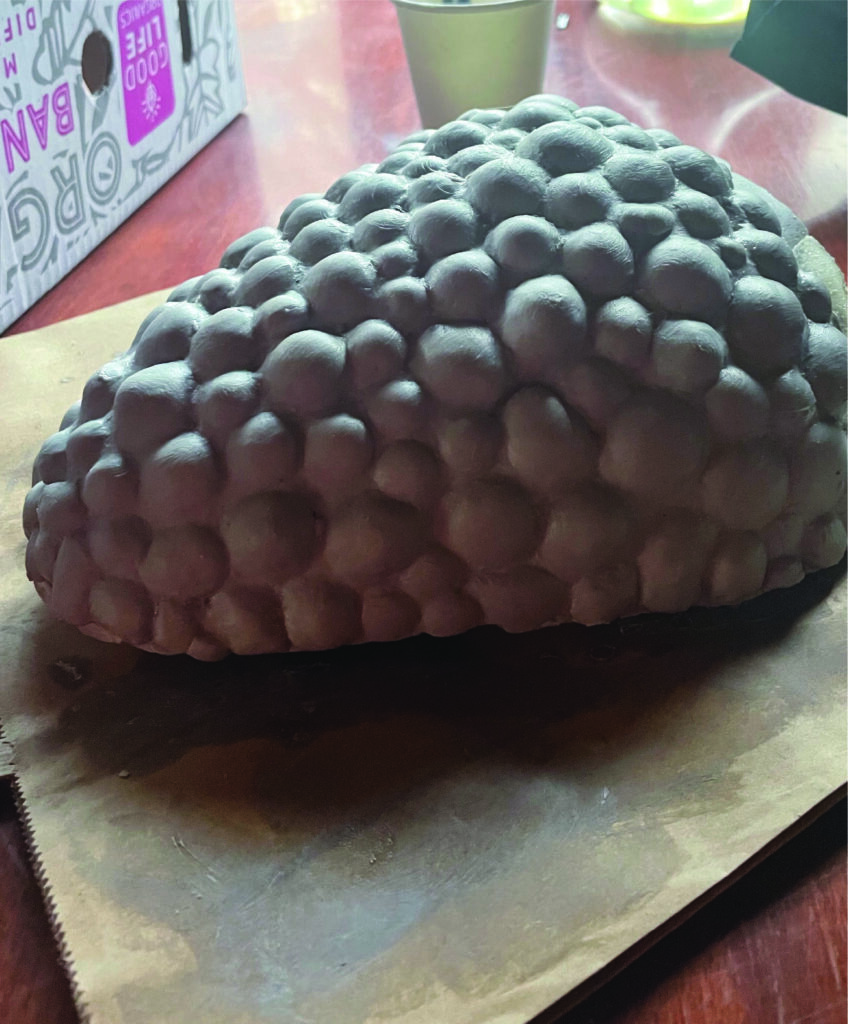
Hand sketches explore the clustered surface and tapered silhouette. Paper mockups test size in hand, internal capacity, taper proportion and the balance between width and depth. Clay then brings the form into three dimensions.
Natural form sketch
Observing the clustered geometry.
Paper pattern mockup
Testing proportion and volume.
Clay model
Bringing the form into three dimensions.
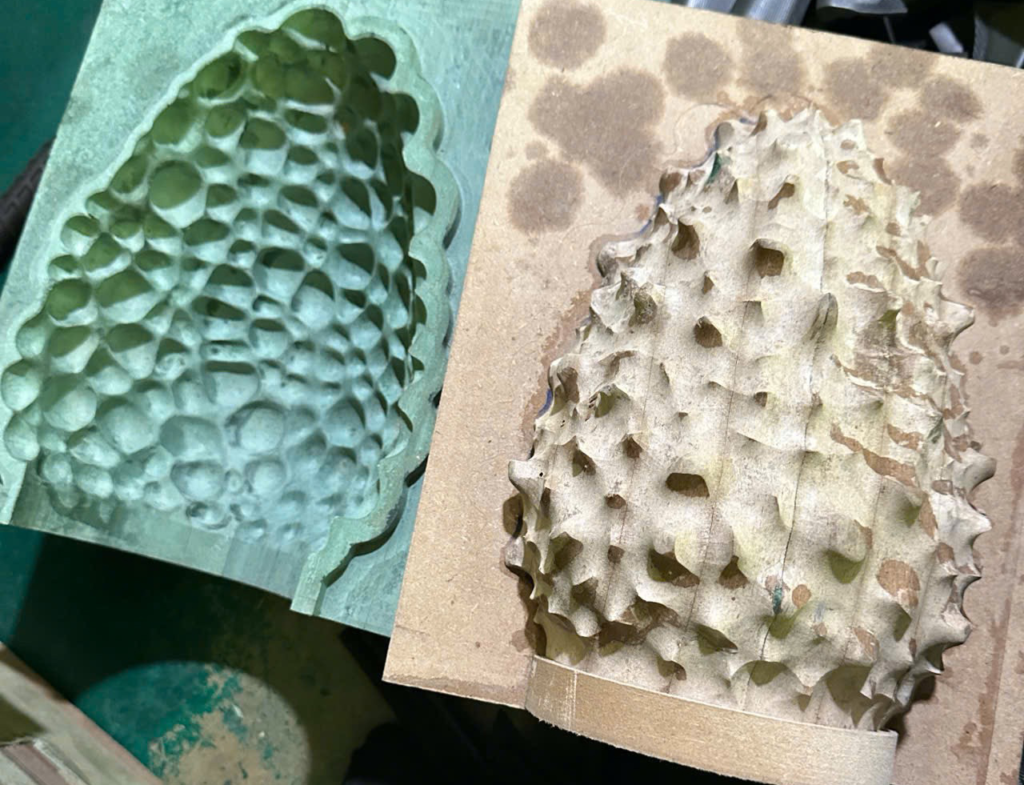
Mould making
Negative and positive mould studies.
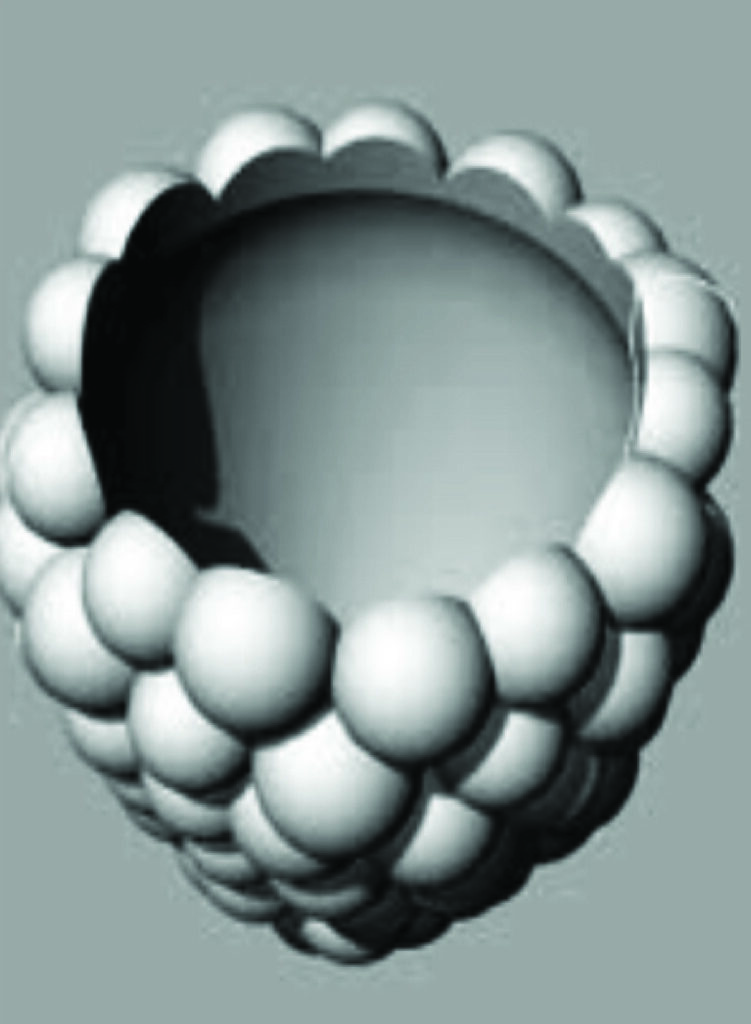
Digital study
Examining the structure in 3D.
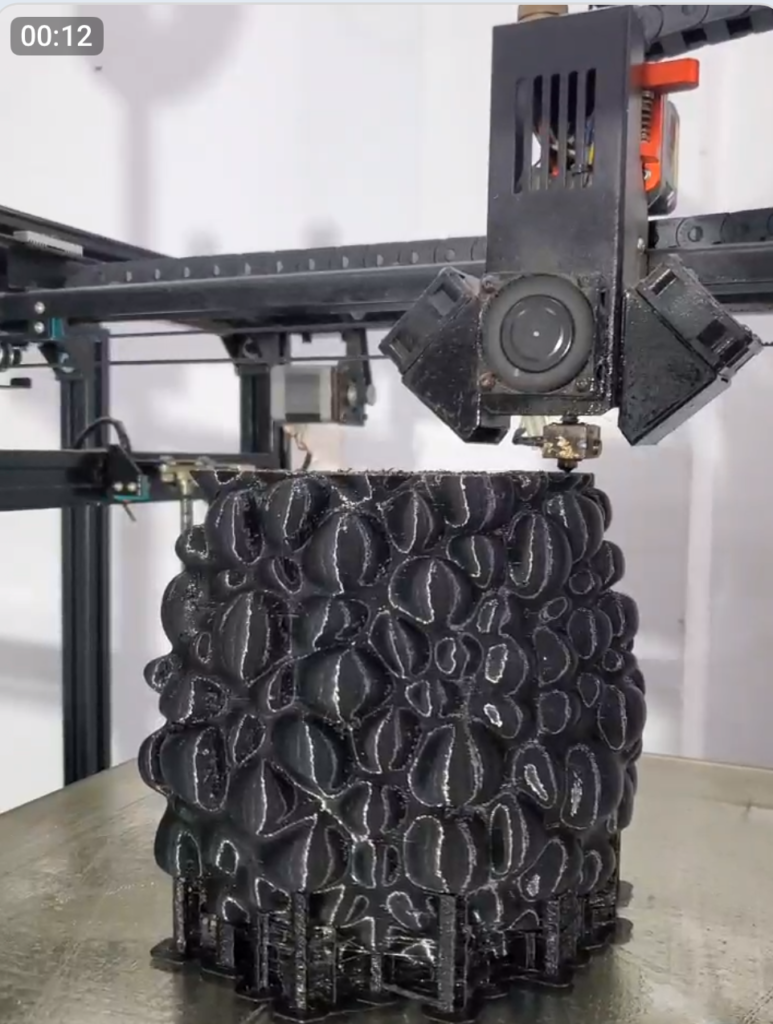
3D printing
Testing surface and scale.
A positive clay form was shaped, then transformed into a negative mould. The raised forms draw on the drupelets of a blackberry: spacing, height variation and density were refined so the surface felt organic.
Physical moulds, digital models and test prints examine the relationship between surface and structure.
A closer look at the making.
The form was translated into a digital 3D file and printed repeatedly to refine sphere spacing, wall thickness, the lip for stitching, the internal cavity and alignment between the two halves.
Each test revealed subtle issues of compression, balance or scale. Reclaimed lamb leather gives the finished clustered surface its final character.
Sculptural bags are becoming increasingly important in contemporary fashion because they blur the boundary between accessory and object. Rather than simply carrying essentials, these designs express a point of view through form, texture and silhouette. In a landscape where many handbags follow similar structures, sculptural pieces stand out by transforming everyday items into wearable art.
The Berry Bag explores this idea by translating the organic geometry of clustered berries into leather craftsmanship. Each raised form creates depth and rhythm across the surface, allowing the bag to function both as a practical accessory and a sculptural statement. As fashion moves toward more distinctive and thoughtful design, pieces that balance artistry and function are likely to shape the future of accessories.
Designed by Kim Clark for KIMC STUDIO, an independent Melbourne label.
Material: reclaimed lamb leather.
Dimensions: 22 cm wide × 26 cm high.
Colours: Black, Beige and Burgundy.
Carry by hand, on the shoulder or crossbody with the short or long strap.